
Owning the Fan: How the Premier League’s New Online Store Signals a Direct To Consumer (DTC) Future
The Premier League is no longer just flirting with direct‑to‑consumer – it is stepping into it. From launching its own global online store for league‑branded merchandise to unveiling Premier League Plus, a 24/7 DTC streaming service in Singapore that will show all 380 games and could be replicated in other markets, the league is starting to build its own customer base, not just audiences for broadcasters and retailers. That raises a bigger question: where does the fan relationship really sit now – with clubs, players, the league, or increasingly with whoever controls the data and the touchpoints?
At Game Changers, we sit close to this shift with our clients and partners and see every day how fan behaviour is fragmenting across platforms, devices and geographies. That is why we have focused on helping rights holders join up their digital and physical touchpoints and use AI and predictive analytics to move from raw fan data to clearer insight, better decisions and, ultimately, better experiences for supporters and stakeholders alike.
From B2B rights-holder to Direct To Consumer (DTC) brand
For decades, the Premier League treated the fan relationship as something “owned” by the clubs and mediated by broadcasters, licensees and retailers. What we are seeing now from the official Premier League Shop, to Premier League x PUMA products and licensed collectibles is a clear move towards becoming a direct-to-consumer organisation with its own product ecosystem.
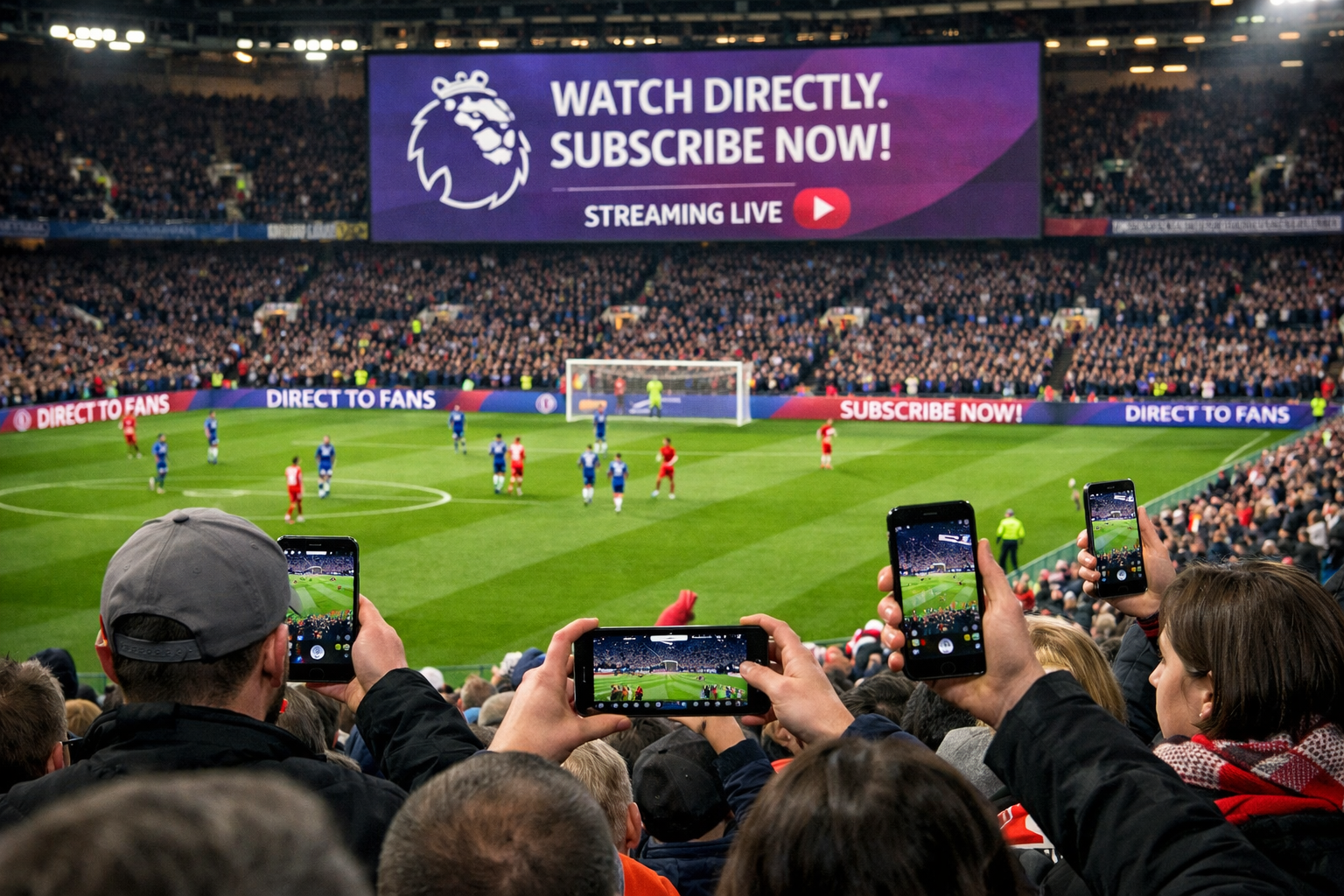
This follows a wider trend: in 2022/23, leading clubs like Liverpool and Manchester United each generated over £113m from retail, merchandise, apparel and product licensing alone, underlining the upside when you control the product and the data around it.
Five years ago, I discussed with the Premier League that fandom exists in layers – local club loyalists, “player-first” fans, and a huge global audience who feel connected to “the Premier League” itself as an entertainment brand. The reaction then was that “fans belong to clubs.” The reality we now see, including at Premier League US events where branded league jerseys have outperformed individual club shirts, is that there is strong demand for a league-first identity alongside club loyalties.
I was fortunate to see the early stages of this shift from the inside while leading the Oracle sponsorship with the Premier League. Working together, we migrated 30 years of archived match footage and data into Cloud Infrastructure, this was one project of many other projects to help Premier League build their own tech infrastructure and own their data. That work sat alongside developing a more direct-to-consumer mindset from “Match Insights powered by Oracle Cloud” and real-time advanced stats, to exploring AI use cases that could turn this data into more personalised, engaging fan experiences across broadcast, digital and in-stadium touchpoints.
The data behind fan demand
The merchandise numbers around the Premier League tell a clear story of appetite and fragmentation. Individual clubs like Liverpool and Manchester United now sell around 1.8 million replica shirts each per season, generating more than £113m per club from retail and licensing. At the same time, mid-tier and smaller clubs generate single-digit millions from merchandise, underscoring that much of the global demand is actually for the league and its top stars, not only for any single badge.
Crucially, shirts are no longer just fabric and print – they are becoming connected products. Manchester City’s recent collaboration with PUMA and EA SPORTS FC on a special-edition kit embeds an NFC chip inside the club crest, allowing fans to tap the shirt with a smartphone to unlock in-game rewards, exclusive content and ongoing digital experiences throughout the 2025/26 season. Similar NFC-enabled “connected shirts” are emerging across football, with suppliers like Avery Dennison and innovators such as Fan NFC demonstrating how a jersey can become a live engagement channel, delivering personalised content, rewards and offers every time a fan scans the badge.
A centralised Premier League store allows the league to aggregate these audiences, test new products like connected apparel and digital collectibles, and, critically, capture first-party data on who these fans are, how they buy and how they behave. For an international product whose content archive alone spans every match over 30 years and whose broadcasts reach hundreds of millions of homes worldwide, every interaction – from a fantasy lineup to an NFC shirt tap – becomes a data point that can inform scheduling, content, youth outreach, partnerships and in-stadium experience. This is where sports moves from “selling shirts” to building a global, data-driven fan economy.
Fantasy games as DTC engines
No example shows the power of direct fan relationships better than Fantasy Premier League (FPL). Last season, FPL reached around 11.5 million registered players, roughly double the participation level of 2016, and more than one million people signed up in the first 24 hours of the latest campaign. FPL has become one of the Premier League’s most important digital pillars because it keeps existing fans active every matchweek while bringing in new, often younger, casual fans via competition with friends and colleagues.
Fantasy changes how people watch: fans follow multiple matches, track individual player data and spend more time inside official apps and platforms. That behaviour is a goldmine of insight into preferences, content consumption and global hotspots of engagement, especially in emerging markets and younger demographics who may support several clubs or players at once. Linking this behavioural data with ecommerce data from the new PL store is exactly how a league starts to design personalised products, dynamic offers and new digital services that feel native to this generation of fans.
LaLiga is pursuing a comparable model with its official fantasy game, using cloud analytics to monetise the app and understand user behaviour across millions of players. In Italy, Serie A has just gone a step further by acquiring a 51 percent stake in the leading fantasy platform Fantacalcio in a deal worth around €18 million, gaining direct access to a user base of roughly three to six million players and the first-party data that comes with it. Basketball provides another powerful cross-sport example: the NBA has reported record digital and social engagement, with more than 32 billion views across its social accounts in a season and over 50 percent of its social audience under 25, while NBA League Pass subscribers grew by 50 percent and viewership by 48 percent year-on-year. Those numbers represent a growing base of logged-in, paying fans that the league can engage and monetise directly with tickets, merchandise, international events and digital products.
What this means for other leagues and clubs
For leagues, federations and clubs that still see themselves primarily as B2B rights-holders – selling media, sponsorship and licensing while outsourcing the actual fan relationship – this is a wake up call. The Premier League is building a direct relationship, powered by first-party data, across content, fantasy, ecommerce and events. LaLiga is investing in its own OTT, data and fantasy platforms; and the NBA is using League Pass and its app to convert social reach into logged-in, paying users.
That relationship will compound in value over time, driving higher commercial yields, stronger brand relevance and a more resilient global audience, especially among younger fans whose expectations are shaped by platforms like Netflix, Fortnite and TikTok. If you are not investing in understanding your fans – their behaviours, motivations and digital journeys – you are leaving significant value on the table and risking long-term relevance. The future belongs to competitions that treat “fan data” as a core asset, not an afterthought, and design products and services around it.
At Game Changers, we work with leagues and clubs to map layered fandom, build the right data foundations and design DTC offerings that unlock new revenue while deepening connection with the next generation of fans.
If you are a league, federation or club leadership team and you want to understand what this Premier League shift and the wider moves by LaLiga, MLS, the NBA and others means for your own strategy, from fantasy and memberships to merchandise, OTT and live fan experiences, reach out to us (Game Changers) so we can assess where you are today and help you build a roadmap to a truly fan-centric, data-driven future.
